
William Hirst Shippingport: My Grandfather’s Nuclear Legacy
William Hirst Shippingport history isn’t something I ever expected to find myself researching. For most of my life, William Hirst was simply my grandfather. I knew about his career in nuclear power and had heard the names Shippingport, Three Mile Island, Oyster Creek, and Admiral Hyman Rickover, but as a kid, those stories didn’t carry the historical weight they do for me today.
I knew him as the man married to my grandmother, Jean Anne Hirst. My mother and I lived with them in Parsippany, New Jersey, and they remained part of my life until they died in Ocean City NJ, well into my adulthood.
But when you’re a kid, your grandfather’s job is just your grandfather’s job.
It wasn’t until much later that I began to understand exactly what he had been involved in.
And now, decades later, I’ve started finding his name in the historical record.
William Hirst and Shippingport Atomic Power Station
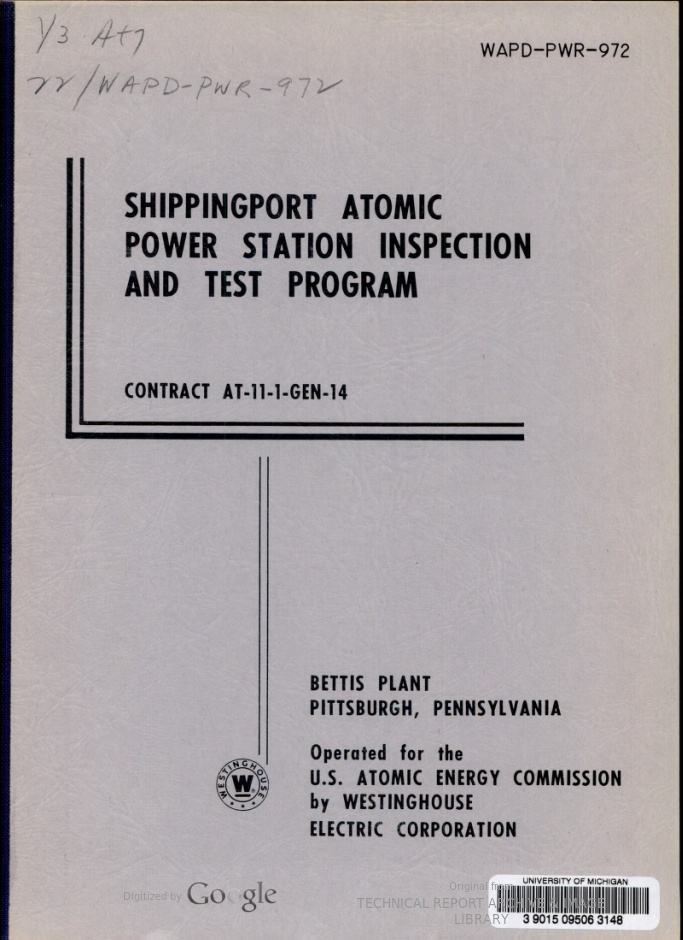
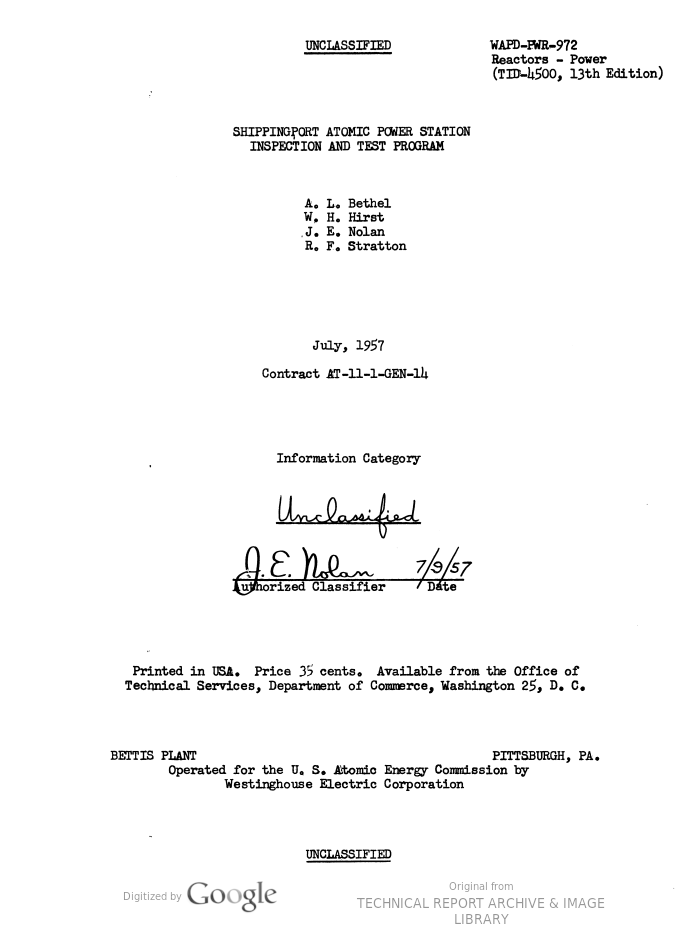
One of the most important discoveries I’ve made is a government publication from 1957 titled Shippingport Atomic Power Station Inspection and Test Program.
Listed among its authors is W. H. Hirst.
That isn’t just an interesting coincidence. The publication is associated with Westinghouse Electric Corporation, Bettis Atomic Power Laboratory and the United States Atomic Energy Commission—the organizations responsible for developing the reactor at Shippingport, Pennsylvania.
Shippingport occupies a special place in American history. It was the first full-scale nuclear power station in the United States built specifically to generate electricity for a utility system.
And the man given principal responsibility for the reactor project was Rear Admiral Hyman G. Rickover, the legendary engineer who became known as the father of America’s nuclear Navy.
Suddenly, the stories I grew up hearing about my grandfather working with Rickover aren’t simply family stories anymore.
His name is there W.H Hirst.
In 1957.
On documentation for the Shippingport Atomic Power Station.
Working Under Admiral Rickover’s Nuclear Program
Rickover had already demonstrated that nuclear power could propel submarines. The technology developed for the Navy’s pressurized-water reactors became the foundation for Shippingport.
President Dwight D. Eisenhower’s Atoms for Peace initiative was pushing nuclear technology toward peaceful civilian applications, and Shippingport became one of the most important demonstrations of that idea.
The Atomic Energy Commission placed responsibility for the reactor portion of the project with its Division of Naval Reactors. Rickover directed the effort, while Westinghouse and its Bettis Atomic Power Laboratory performed much of the engineering work.
My grandfather was part of that world.
The surviving documentation doesn’t mean that William Hirst and Admiral Rickover sat beside each other every morning or personally designed the reactor together. I don’t want to embellish his story beyond what I can prove.
What I can document is better.
William Hirst was involved in Shippingport’s inspection and testing program during the Rickover-led project.
That puts my grandfather at one of the starting points of commercial nuclear power in the United States.
Shippingport achieved its first self-sustaining nuclear chain reaction on December 2, 1957. Later that month, it began producing electricity.
The nuclear-power industry that followed was still largely unwritten.
My grandfather was there near the beginning.
I have digitalized his handwritten notes – Here
From Shippingport to General Public Utilities
His involvement with nuclear power didn’t end at Shippingport.
Years later, William Hirst was working for General Public Utilities Service Corporation, or GPU, in Parsippany, New Jersey.
That part of the story is especially personal to me because Parsippany wasn’t merely an address printed on some corporate document.
We lived there.
My mother and I moved in with my grandparents. I knew William and Jean as my grandparents, not as names that would someday turn up in Department of Energy reports and decades-old nuclear-industry records.
Yet one of those records identifies W. Hirst, General Public Utilities Service Corp., 260 Cherry Hill Road, Parsippany, New Jersey.
That is my grandfather.
And GPU would eventually place him in another remarkable chapter of nuclear history.
Bill Hirst and the Fast Breeder Reactor
While researching Three Mile Island, I found a deposition given decades ago by a GPU engineer named Robert W. Keaten.
Keaten had previously worked for Atomics International and discussed a project involving GPU and the development of a commercial Liquid Metal Fast Breeder Reactor.
During questioning, he was asked who at GPU had been involved.
His answer stopped me.
He said the program fell under the:
“general responsibility of Bill Hirst of GPU.” page 19
Bill Hirst.
My grandfather.
This work dated to approximately the late 1960s and early 1970s and involved concepts that were at the frontier of nuclear-power development.
A breeder reactor was designed not merely to produce energy but potentially to create additional usable nuclear fuel during operation. The technology was considered important enough that the United States invested heavily in breeder-reactor research.
My grandfather wasn’t merely mentioned as somebody who attended a meeting.
According to sworn testimony from another nuclear engineer, the GPU program was under his general responsibility.
That tells me something about his career that I didn’t fully appreciate when he was alive.
Oyster Creek
GPU’s nuclear world also included the Oyster Creek Nuclear Generating Station in New Jersey.
Oyster Creek was operated by Jersey Central Power & Light, one of the companies within the GPU system.
The same deposition that identifies Bill Hirst describes Jersey Central’s participation in GPU’s reactor-development work and says that a Jersey Central representative was stationed with Atomics International.
I am still researching exactly what my grandfather’s personal responsibilities were concerning Oyster Creek. I don’t want to turn an organizational connection into a claim that isn’t supported by documentation.
But Oyster Creek clearly existed within the same GPU nuclear organization in which he held responsibility for advanced reactor work.
And I remember Oyster Creek being part of his story.
Sometimes family memories tell you where to start looking. The documents then tell you how much of that memory can be proven.
And Then There Was Three Mile Island
Three Mile Island is the name most Americans recognize.
On March 28, 1979, Unit 2 at the Three Mile Island Nuclear Generating Station near Middletown, Pennsylvania suffered the most serious accident in the history of commercial nuclear power in the United States.
Three Mile Island was also part of the GPU system.
Metropolitan Edison operated the station, while GPU sat above the operating companies.
That becomes important when understanding my grandfather’s career.
He wasn’t simply an employee assigned to a single power plant. The evidence I’m finding places him within GPU’s larger technical and nuclear organization.
GPU engineering personnel could be involved across projects and generating stations.
The post-accident investigations produced an enormous collection of testimony, engineering studies and depositions. Ironically, one of those depositions—created because of Three Mile Island—is now helping me reconstruct what my grandfather had been doing years before the accident.
That’s how I discovered the statement about Bill Hirst and GPU’s breeder-reactor program.
Three Mile Island became one of the darkest chapters in the history of American commercial nuclear power.
Yet hidden inside the records produced afterward is part of my own family’s history.
I Wish I Had Asked More Questions
That’s probably the part of this that hits me hardest.
I had access to the source.
I could have simply asked him.
William Hirst wasn’t an historical figure to me. He was Grandpa. I lived with him. I knew him for decades. He and my grandmother remained in my life into my thirties.
When he talked about nuclear plants, engineers, Rickover or the projects he’d worked on, I didn’t have the historical perspective to understand what I was hearing.
Now I do.
Today I can search government archives and find W. H. Hirst attached to documentation for Shippingport.
I can read a decades-old sworn deposition and suddenly see the words “Bill Hirst of GPU.”
I can find his Parsippany office listed in government technical documents.
Each discovery gives me another small piece of a conversation I wish I could have with him today.
“Grandpa, what exactly did you do there?”
“What was Rickover really like?”
“What did you think the first time that reactor went critical?”
“What did everyone at GPU think when Three Mile Island happened?”
There are a hundred questions I’d ask now that never would have occurred to me then.
Finding My Grandfather in the Historical Record
What started as curiosity about my grandfather has become something different.
I’m reconstructing his career.
So far, the trail stretches from the beginnings of American civilian nuclear power at Shippingport, through advanced breeder-reactor development, into General Public Utilities, and into the same nuclear organization that encompassed Oyster Creek and Three Mile Island.
There may still be Salem records waiting to be found.
There are undoubtedly other documents buried in Atomic Energy Commission, Department of Energy and Nuclear Regulatory Commission archives.
And somewhere among all those reports, transcripts and engineering documents are pieces of the life of the man I simply knew as my grandfather.
I think that’s why this matters to me.
History books talk about presidents, admirals, corporations and accidents.
They talk about Eisenhower and Atoms for Peace.
They talk about Admiral Rickover.
They talk about Shippingport.
They talk about Three Mile Island.
But thousands of engineers, technicians and other people actually built and operated the systems that became that history.
One of those people was William Hirst.
And he was my grandfather.
More on Life.log