
Forty Years in Ocean City: 1984–2024
Living in Ocean City NJ was my normal life for forty years. I moved there in 1984 when I was twelve years old, and I moved away in 2024.
Forty years is a long time to live anywhere, especially on a barrier island only about seven miles long.
For millions of people, Ocean City is somewhere they visit for a week. They rent a house, go to the beach, walk the Boardwalk, eat too much pizza and ice cream, complain about beach tags, load the car on Saturday morning, and head home.
For me, Ocean City was home.
I grew up there. I worked there. I surfed there. I had girlfriends there. I went to house parties there. I left from there to see the Grateful Dead. I met the woman who became my wife through people and places connected to Ocean City. We raised our kids there.
I also watched the town slowly change around us.
Some of those changes were good. Some made perfect sense. Some I hated. And some probably happened so gradually that I didn’t really notice until I looked around one day and realized how much was gone.
The Ocean City I Remember
When I arrived in 1984, Ocean City was already a major summer resort. I am not going to pretend we were living in some quiet fishing village that tourists eventually discovered and ruined.
The tourists were always part of the deal.
But Ocean City was also a real year-round town.
Families lived there. Teachers lived there. Restaurant workers, tradespeople, business owners and regular working people lived there.
Summer was busy.
Winter belonged to us.
After Labor Day, the island seemed to take a breath. Traffic disappeared. Parking spaces came back. Businesses shortened their hours or closed for the season. Streets that could barely handle the crowds in July might feel almost empty in January.
I never thought that was depressing.
That was when we got our town back.
There was something completely different about the Boardwalk in winter. No crowds. No bikes weaving around pedestrians. No amusement rides running. Sometimes there was nobody around except a few locals and the sound of the ocean.
If you only knew Ocean City in July, you really only knew half the place.
Maybe less.
The Chatterbox
Few places connect the different parts of my Ocean City life better than the Chatterbox.
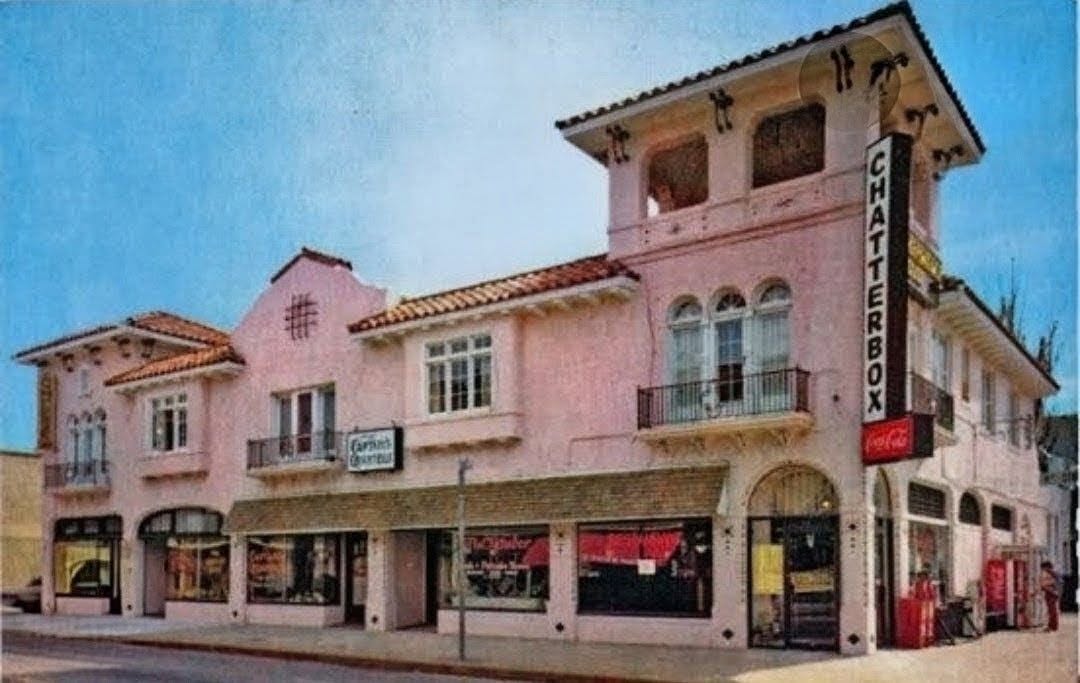
That bright pink building at Ninth Street and Central Avenue was one of those places you didn’t really think about because it had always been there.
Long before it had any romantic meaning for me, it was simply where my mother worked.
She waitressed there when I was in high school. I would sometimes go over after school and wait for her shift to end.
My routine usually involved a mushroom cheeseburger.
At the time, I wasn’t thinking about the history of the Chatterbox. I wasn’t thinking about architecture, Ocean City landmarks or the fact that generations of people recognized that building the second they came off the bridge.
I was a teenager waiting for my mom to finish work and eating a burger.
That’s how places become important.
Usually you don’t know it while it’s happening.
Years later, the Chatterbox became connected to another part of my life.
Kendra worked there.
The woman who eventually became my wife.
I had noticed her before, but we really connected later at Reggae Night at Shenanigans in Sea Isle City.
She bought me an Amstel Light.
Then, before she left, she licked my cheek.
There are probably more conventional ways for a relationship to begin.
Apparently we didn’t need one.
The Chatterbox stayed part of our story. Kendra’s aunt Amy would eventually own it, and there were nights when we would come back from bars in Somers Point and end up there for a Reuben.
So when I think about the Chatterbox, I don’t just see an Ocean City landmark.
I see my mother working.
I see myself sitting there after school.
I see Kendra.
Different parts of my life all ended up occupying the same pink building.
The Chatterbox itself goes back to 1937, and the building was designed by Ocean City architect Vivian Smith, who was also responsible for several other recognizable Ocean City buildings.
That is interesting history.
But my history with the Chatterbox is much simpler.
Sometimes I just wanted a mushroom cheeseburger and a ride home from my mom.
Voltaco’s
Another huge part of my Ocean City life was Voltaco’s.
I started working there when I was about fourteen and stayed until I was around twenty-five.
Eleven years is a long time at any job, especially when you start as a kid.
Voltaco’s became one of those places where work and social life blended together. When you work in a restaurant in a summer town, especially when you’re young, the people you work with become part of your world.
You work together. You go out together. You know everybody.
Then summer ends and the entire rhythm changes again.
I spent some of what I still think of as my best years in Ocean City during my late teens and early twenties.
I worked. I surfed. For a while I played in a house band. I performed magic. Eventually I even had my own little computer business, Wright’s Computer Service.
There wasn’t some master plan behind any of it.
I was just living my life.
Ocean City happened to be where I was doing it.
Voltaco’s is gone now.
Joe and his family eventually decided they wanted to get out of the restaurant business.
I understand that. Restaurants are brutal work.
But when a place has been part of your personal map for decades, losing it feels different.
You don’t just lose a restaurant.
You lose one of the places where an earlier version of yourself used to exist.
Summer Friends and Packed Houses
Then there were the houses.
During my younger years, especially in the late 1980s and early 1990s, Ocean City developed this temporary society every summer.
People rented houses together. Friends invited friends. Somebody slept on the couch. Somebody slept on the floor.
There were surfboards everywhere.
Wet towels everywhere.
Beer somewhere.
Nobody seemed especially concerned about how many people the house was actually supposed to hold.
I had a group of friends I met around my junior year of high school. At one point they were living around 14th Street in what I remember as a three-level duplex where they somehow occupied the top and bottom floors.
I realize that explanation doesn’t make a lot of architectural sense.
That’s how I remember it.
Those houses became gathering places. People were constantly coming and going. Friends, surfers, girls, friends of friends, people you knew for years and people you knew for one summer.
One night in the early 1990s, before I knew Kendra and while I was still dating my high school sweetheart, Krista, there was a party somewhere around 18th and Central, if my memory is right.
The place was packed.
There was an actual pedal organ in the house, the old kind where you worked the pedals with your feet to pump air through the instrument and create the sound.
A few of us were playing around with it that night, and the one song I clearly remember playing was Pink Floyd’s “Wish You Were Here.”
I don’t remember every detail of that party.
I remember the crowd. I remember the friends. I remember the organ.
And I remember the place being full of people, including plenty of women my friends had somehow managed to attract.
They always seemed considerably better at that than I was.
It was crowded, loud and probably a little ridiculous.
It was also fun.
Forty years of memories aren’t made entirely from weddings, births, deaths and major events.
They’re made from nights like that too.
Sometimes those are the ones you remember best.
Leaving the Island for the Dead
Some of my strongest Ocean City memories actually begin with leaving it.
On April 1, 1989, I climbed into a yellow Volkswagen bus with my friends Jason, Dave and Doug.
We were heading to Pittsburgh to see the Grateful Dead.
The bus struggled through the Pennsylvania mountains. We listened to music, eventually made it to Pittsburgh, camped near the Civic Arena and saw the Dead the next day.
It was my first Grateful Dead show.
That trip became part of a much larger period of my life.
At the time, though, we were just four young guys in a Volkswagen bus heading to a concert.
Jason died only a few years later.
That changes the way I remember the trip now.
When you’re young, it never occurs to you that someday a memory about driving to a concert will become one of the places where your friend still exists.
Back then, there was always another summer coming.
Another party.
Another concert.
Another weekend.
You don’t understand yet that eventually there won’t be.
Meeting Kendra
Eventually my Ocean City life changed from girlfriends, concerts, surfing and crowded houses into something else.
Kendra became part of it.
Then marriage.
Then kids.
The island didn’t stop being fun. It just became a different kind of place.
The Boardwalk wasn’t only somewhere I went with friends anymore.
Now I was seeing it through my children’s eyes.
One of my favorite memories has nothing to do with summer.
It was winter.
My daughter was around eight and my son around four. There was snow on the Boardwalk, and they took bodyboards and used them as sleds on the Boardwalk ramps.
That is such an Ocean City kid thing to do.
The same boards they used in the ocean during summer became sleds in winter.
There were no tourists around.
No summer crowds.
Just our town.
Those are the kinds of memories that explain the difference between living in Ocean City and vacationing there.
Our kids didn’t see the beach as somewhere we went once a year.
It was just there.
The Boardwalk wasn’t a special attraction we had driven hours to visit.
It was part of their neighborhood.
That kind of childhood is hard to appreciate while you’re living it.
The Houses Started Disappearing
While our family was growing up, Ocean City was changing too.
It didn’t happen all at once.
It happened one property at a time.
An older single-family house would disappear.
Then another.
Then another.
In its place would often rise something much larger.
Two units.
More floors.
Garages underneath.
Multiple decks.
More bedrooms.
More bathrooms.
More people who could fit into a weekly rental.
From a financial standpoint, I understand why it happened.
Ocean City property became incredibly valuable.
When the land under a small older house becomes worth a fortune, eventually somebody looks at the numbers and realizes they can tear it down and build something that generates much more money.
That’s business.
I understand business.
I still didn’t have to like what it did to the neighborhoods.
Not every old Ocean City house was some beautiful historic masterpiece.
Some were probably terrible.
Some had tiny kitchens.
Some had bad wiring.
Some probably had insulation that barely deserved the name.
Some had plumbing that had been questionable for decades.
Nostalgia has a way of improving old construction.
But those houses were different from one another.
They had porches.
They had small yards.
They had personalities.
More importantly, many of them had families living in them all year.
As more of those houses disappeared, the streets changed.
You could drive down a block you had known for thirty years and realize the street name was still the same, but almost everything else looked different.
The biggest change wasn’t always one particular building.
It was what happened when enough of them disappeared.
Saturday to Saturday
The weekly rental business became more visible too.
Saturday morning, one group left.
Saturday afternoon, another arrived.
SUVs opened.
Coolers came out.
Beach carts appeared.
Bikes unloaded.
Families spent the next week building their own Ocean City memories.
Then the next Saturday came and the whole thing reset.
There is nothing wrong with that.
Ocean City is a resort town.
Those visitors support the restaurants, stores, Boardwalk businesses and countless people whose livelihoods depend on summer.
I understood that even when I was complaining about the traffic.
And I complained about the traffic.
Locals learn quickly that summer driving requires strategy.
You know which streets to avoid.
You know when not to cross town.
You know a trip that takes five minutes in February can become something entirely different in July.
You learn patience.
Or at least Ocean City gives you decades of opportunities to learn patience.
I wouldn’t claim I mastered it.
When Regular People Could Still Live There
The larger change was affordability.
There was a time when regular working people could actually live in Ocean City.
Not easily.
Ocean City was never bargain real estate.
But there is a difference between expensive and nearly unreachable.
Over time, that gap became enormous.
Property values climbed.
Taxes climbed.
Demand climbed.
The value of the land underneath an ordinary house sometimes became more important than the house itself.
The economics of weekly rentals mattered more and more.
That changes more than real estate.
It changes a town.
When teachers, restaurant workers, tradespeople, young families and other people who work in the community increasingly have to live somewhere else, the year-round population changes too.
Ocean City got more enormous houses.
More bedrooms.
More bathrooms.
More decks.
More rental capacity.
But it also became harder for ordinary people to actually live there twelve months a year.
That was the part that bothered me.
I wasn’t angry that people wanted to vacation there.
They always had.
I wasn’t angry that people wanted nice houses.
Who doesn’t?
What bothered me was watching Ocean City become extremely good at being a vacation product while slowly becoming harder to recognize as the hometown I knew.
The Good, the Bad and the Ugly
This is where nostalgia can become dishonest.
It would be easy for me to pretend everything was wonderful in 1984 and everything slowly went downhill from there.
That isn’t true.
The old Ocean City had problems too.
Some of those old houses probably should have been torn down.
Some of the new buildings are beautiful.
Construction improved.
Flood requirements changed.
Families wanted more space.
People vacation differently now.
The island adapted.
And memory is a terrible historian.
Memory gives every summer perfect weather.
It forgets bad relationships.
It turns old houses into charming cottages and conveniently leaves out bad plumbing, mold and leaking roofs.
It edits out arguments.
It removes boring days.
It makes your younger self seem much smarter than he probably was.
I don’t want to do that.
There were bad years.
There were mistakes.
Relationships ended.
Friends disappeared.
People died.
There were winters when Ocean City felt too small.
There were summer weekends when I wanted half of Pennsylvania to go home.
There were probably plenty of times when I couldn’t wait to get off the island.
Then September would arrive.
The traffic thinned out.
The nights got cooler.
The Boardwalk emptied.
And almost immediately I remembered why I loved living there.
The good, bad and ugly were always mixed together.
That’s what made it home instead of a postcard.
Forty Years
By the time I left Ocean City in 2024, I had lived there for forty years.
I arrived at twelve.
I left in my fifties.
Somewhere between those two versions of me were my teenage years, Voltaco’s, surfing, house parties, girlfriends, Grateful Dead shows, Jason, the Chatterbox, Kendra, marriage, our daughter, our son, my computer business, work, bills, mistakes, good years, terrible days and thousands of completely ordinary moments.
That’s what forty years really is.
Most of a life isn’t made out of major events.
It’s knowing how long a certain traffic light takes.
It’s recognizing houses by the people who used to live there.
It’s knowing the back streets without thinking about them.
It’s that first warm spring day when everybody suddenly remembers the beach exists.
It’s watching businesses reopen.
It’s hearing the Boardwalk come alive.
It’s knowing Labor Day is getting closer and secretly being a little relieved.
It’s watching the town empty again.
It’s complaining about tourists while knowing perfectly well that tourists are part of what makes Ocean City possible.
It’s driving past a lot where a house you remember used to stand.
“There goes another one.”
You say that enough times and eventually you stop saying it.
Leaving
By the time I left in 2024, Ocean City wasn’t the same place I remembered moving into in 1984.
Of course it wasn’t.
I wasn’t the same person either.
Expecting any place to remain unchanged for forty years would be ridiculous.
The town had become more seasonal, more expensive and less like the year-round community I remembered.
Eventually I left.
I don’t think Ocean City was ruined.
That would be too simple.
People who vacation there today are making the same kinds of memories I made decades ago.
Some kid is probably riding his bike down the Boardwalk right now thinking the place belongs to him.
Good.
It should.
Some teenager is probably sitting in a crowded house with friends doing something every bit as ridiculous as playing Pink Floyd on an old pedal organ.
I hope so.
Some kid is probably eating lunch somewhere while waiting for his mother to finish work.
Some couple is meeting for the first time without realizing that decades later somebody may ask them how the whole thing started.
Life keeps moving.
That’s the part nostalgia doesn’t always like.
My Ocean City didn’t disappear because one house came down.
It didn’t disappear because one restaurant closed.
And it isn’t sitting somewhere frozen in 1984 waiting for me to come back.
It exists in a period of time.
1984 to 2024.
The Chatterbox is in it, bright pink at Ninth and Central.
Voltaco’s is still open.
Jason is still climbing into that yellow Volkswagen bus.
My mother is still working her shift.
I’m still sitting there eating a mushroom cheeseburger.
Kendra hasn’t licked my cheek yet.
My kids are still young enough to think a bodyboard makes perfect sense as a snow sled.
The old houses are still standing.
The Boardwalk is quiet in January.
And I’m still young enough to believe there will always be another summer.
That’s the Ocean City I miss.
Not because it was perfect.
Not because everything was better then.
Because it was mine.
I spent forty years there.
And in 2024, I finally left the island.
But forty years doesn’t pack into a moving truck that easily.